We ran an AI model’s Instagram for a year. The 7 lessons that actually grew our reach, the 3 mistakes that set us back, and why the algorithm never cared.
We ran an AI model’s Instagram account for the better part of a year to figure out one thing. What actually drives reach when the influencer isn't even real. Turns out, almost nothing we assumed.
We had lazily figured a gorgeous AI face would carry it. Nope. The face barely mattered. What moved the numbers was boring and operational. And honestly, the account only held together because we got the AI tools behind it right early on.
So here's the field report. What an AI model on Instagram even is and why its reach is a bit weird. Then the lessons that grew ours, and the dumb mistakes that set us back for a while.
What An AI Model On Instagram Actually Is
Fast grounding, then the good stuff.
What An AI Model On Instagram Really Means
An AI model on Instagram is a person who doesn't exist. Fully generated. Not a real human with a heavy filter. Just a digital character dreamed up and run by somebody behind the scenes.
You have almost certainly followed one and not realized. AI influencers like Aitana and Lil Miquela pull millions while being pure software. The face. The fits. The background. All made up.
How These Top AI Influencer Marketing Accounts Actually Get Made
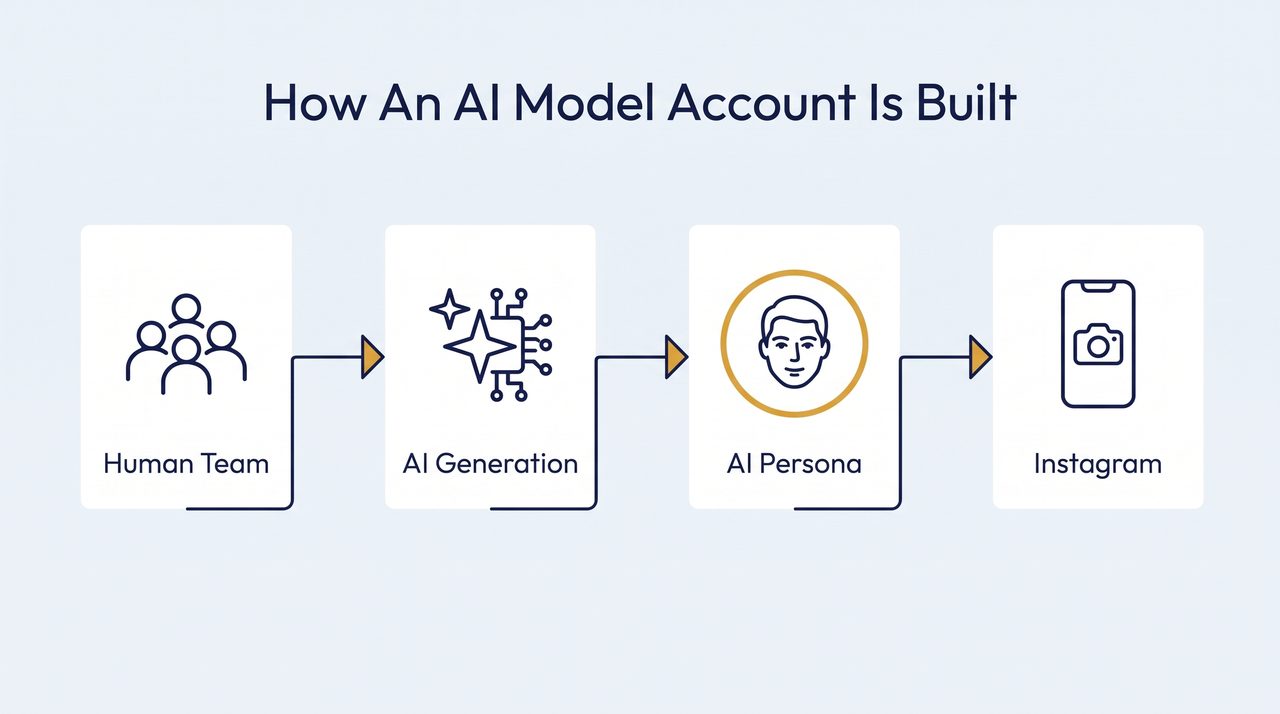
It is less wizardry than you would think. You invent a consistent virtual character with full creative control and use digital storytelling to bring it to life. You generate photos with AI generative tools and keep her face steady from post to post. Then you post content and reply like any normal account.
People wildly underestimate the running of it, though. It is a live account with real comments and DMs. And keeping it all managed is a proper job, not a weekend toy.
Why Reach Works Differently For An AI Model: 3 Key Reasons
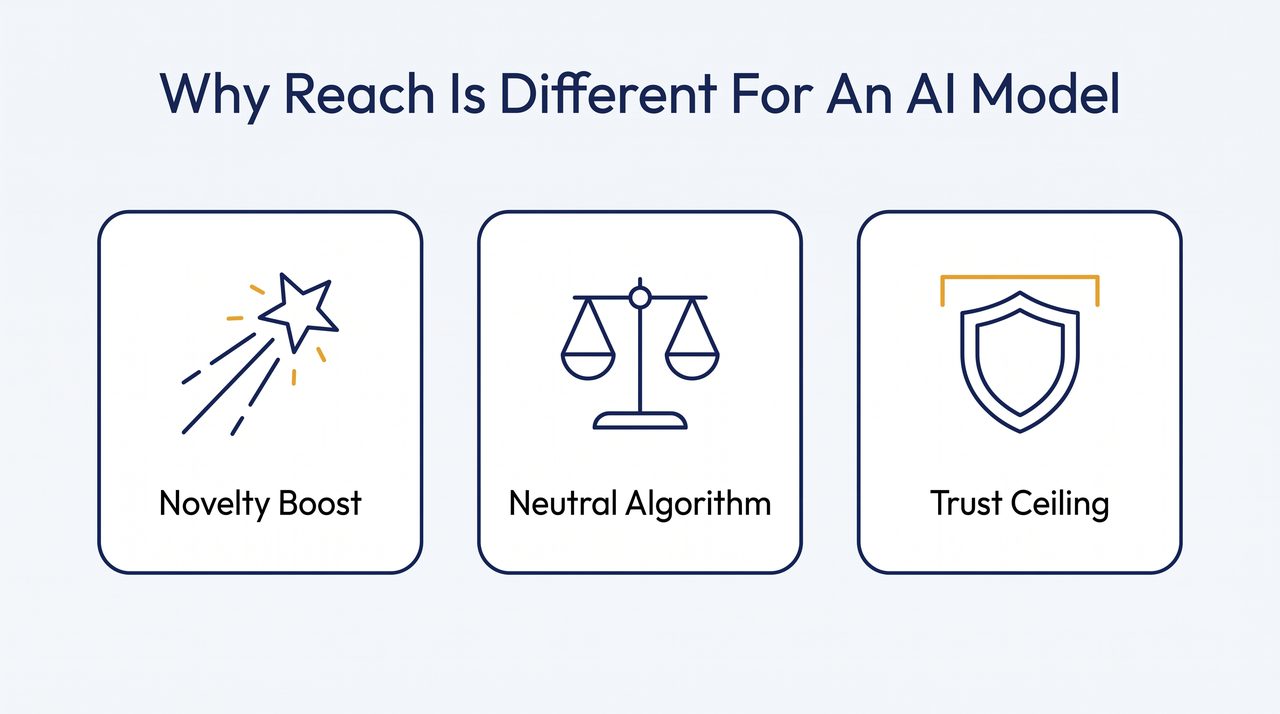
This bit genuinely surprised us. Reach on an AI model Instagram account doesn't move like a normal creator's. Three things stood out.
1. The Novelty Buys You An Early Boost
You get a weird free head start. People are nosy about AI models. So they double-take and follow just to watch the trainwreck or the magic. That curiosity is rocket fuel at the start.
And the virtual influencer market is already primed. A 2025 Whop study found 40% of Gen Z already follow a virtual influencer. So this isn't some fringe thing. It is a massive slice of young users basically waiting to give an AI account a shot.
2. The Algorithm Doesn't Care That She Is Not A Real Person
We braced for Instagram to shadow-ban the whole thing for being fake. Didn't happen. The algorithm has no clue and no feelings about it. It reads the exact same signals as everyone else. Watch time. Shares. Saves. A neural net making the picture means nothing to it.
Which cut both ways. No punishment for being AI, but zero favors either. We had to earn every scrap of reach on the same terms as a human creator. Weirdly, that felt fair.
3. Trust Is The Real Ceiling On Your Reach
The one that actually hurt was the ceiling. Casual reach was easy. The second we tried to sell anything, people pulled back. They will happily watch an AI creator all day. They won't act on what she tells them to buy. And that hurts both the brand and the AI creator.
The numbers say it out loud. On sponsored posts, human influencers get 2.7 times the engagement of AI ones. Novelty gets you the eyeballs. Trust decides if those eyeballs ever do anything.
The 7 Reach Lessons We Learned The Hard Way By Running An AI Model’s Instagram
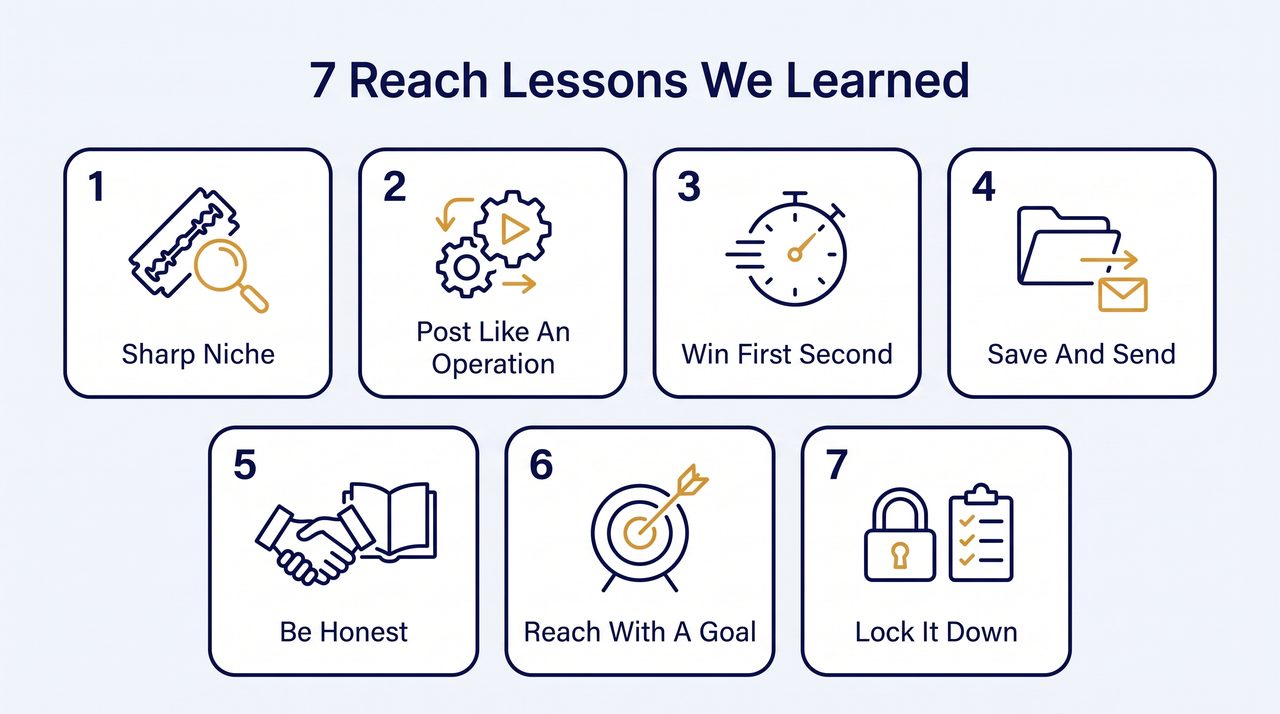
Okay, the useful part. Seven lessons, and every one of them cost us a dead week of reach to learn.
1. Pick One Sharp Niche And Stick To It
Our reach only worked when we got almost boringly focused. An account that posts a little of everything leaves the algorithm and the viewer equally confused. Nobody can say what you are about.
The accounts that actually climb grip one lane and refuse to let go. Variety is fun and free. All it really does is blur the signal that tells Instagram who to put you in front of.
The scary part of niching down isn't picking a lane. It is realizing you then have to go way deeper into it than feels comfortable. A shallow niche account is nearly as forgettable as a broad one, since anyone can post shallow takes on anything.
Look at how far Nootropics Depot’s memory supplements lineup goes into this. They could have just shown pretty shots of brain pills on Instagram and called it a day. Instead, they get obsessive. Every post names a standardized extract, not a vague blend.
Bacopa shows up as Cognance, Lion's Mane as an 8:1 extract. They run third-party testing at accredited labs and say so plainly. They even steer you by which mechanism you are trying to support.
That depth is the whole point. It signals they are not dabbling. They are the authority, and the algorithm treats authority accounts as safe to recommend. Your AI model account needs the same.
Don't be another pretty face with unrealistic beauty standards and posting generic lifestyle imagery. Go unreasonably deep on one specific world, until following you becomes the obvious call for that one thing.
How To Do It:
- Write one sentence naming exactly who the account is for and why
- Audit your last 20 posts and cut anything off your core theme
- Pick three content pillars and flatly refuse to post outside of them
- Make your niche obvious in the bio and the grid and the captions
2. Post Like An Operation, Not A Hobby
The biggest single jump came from dull consistency. Post daily, and reach snowballs. Go quiet for a week, and it falls off a cliff, then takes forever to climb back. The algorithm loves a steady drip of content and genuinely punishes the stop-start thing. Running the account like a casual hobby was the quickest way to smother it.
When your output grows, you will almost certainly reach for a tool like monday.com to run the pipeline. Good instinct. But nobody warns you about the flip side. monday.com is deceptively easy to turn into a complicated system.
You start with one clean board. Six weeks later, you have 15 boards nobody agrees on. Automations fire at the wrong times. The team sneaks back to a group chat because the setup got confusing.
That is the gap monday.com integration services fill. Instead of you learning the platform's quirks the painful way, they architect the boards around how your content actually flows. They wire up automations that don't fight each other. They connect your other tools so nothing gets re-typed by hand.
And more importantly, they set it up so the team actually uses it. That adoption piece is what most DIY builds get wrong, and it is the difference between a system that runs your posting and an expensive board graveyard you feel guilty about.
How To Do It:
- Batch a full week of posts in one sitting to protect cadence
- Keep a running content calendar so you always know what posts next
- Give every post a clear status so nothing of yours stalls half-finished
- Build a small buffer of scheduled posts to cover your busy weeks
3. Win The First Second Or Lose The Scroll
Reach gets decided in the first blink. We stared at our retention graphs like gamblers, and the story never changed. Miss the hook in the second one, and everything after it is wasted, because they are already gone. A genuinely great post with a sleepy opener reached nobody. A so-so one with a punchy first frame flew.
A part of this is just raw image quality. A blurry or badly lit frame loses before the hook can even open its mouth. So getting the visuals properly crisp is the floor, not some final polish.
How To Do It:
- Open every reel on motion or a face, never a slow logo
- Lead with your single strongest visual frame inside the very first half-second
- Cut the first second ruthlessly if it doesn't actually stop a thumb
- Test three different openers on the same clip and compare the retention
4. Make Content People Save And Send, Not Just Like
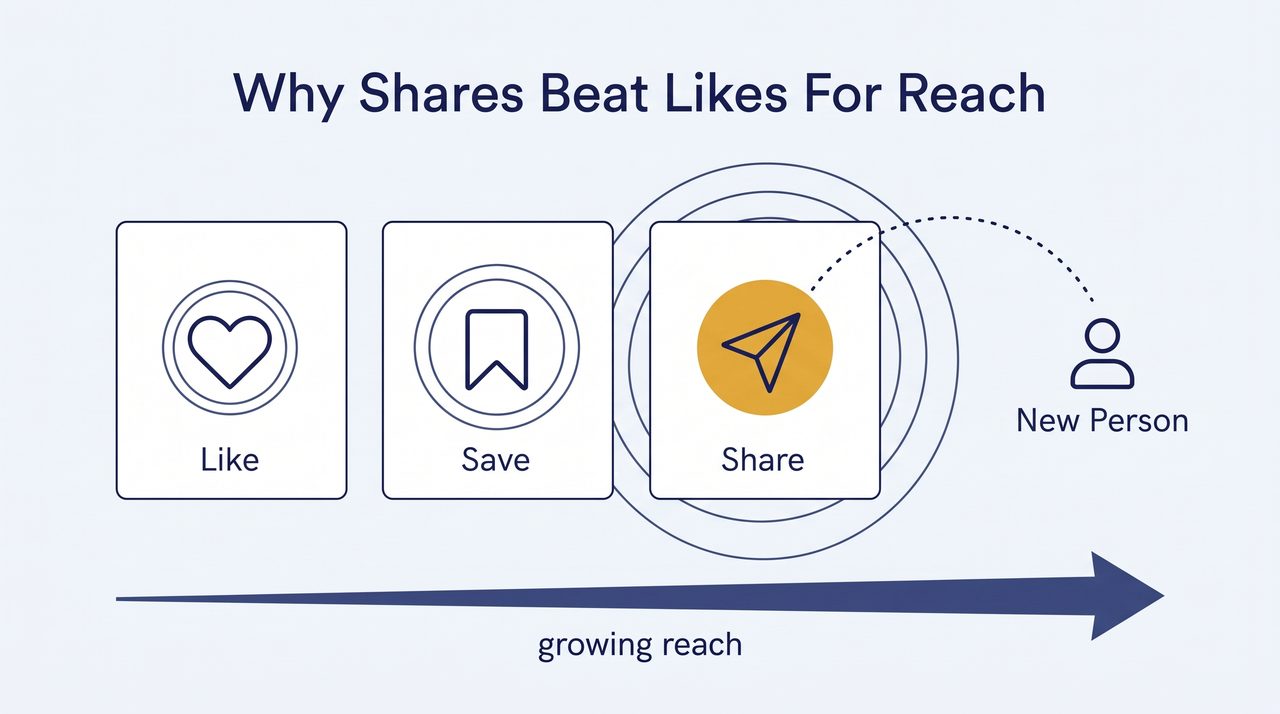
Likes were amazing… and did almost nothing for reach. The posts that spread were the ones people shared with a friend or secretly bookmarked.
A like is a polite nod. A send is someone vouching for you, handing your post to a person Instagram would never have reached on its own. We quit chasing applause and started chasing forwards.
Instagram pretty much admits this itself. Its own people have said DM shares are the single most weighted signal for how far a reel goes. So the question for every post stopped being whether people would like it. It became whether a single person would actually send it on.
How To Do It:
- Make each post useful or funny enough that sending it feels natural
- Add a genuinely save-worthy tip or list that people will want later
- End your reels with a genuine reason to tag a specific friend
- Track your saves and shares instead of likes as the real scoreboard
5. Be Honest That She Is AI
We A/B tested hiding the AI angle against owning it loudly. Owning it crushed. When we said plainly that she was AI, the comments got friendlier. The shares jumped too.
People felt let in on the joke instead of played. The accounts that fake being human and get found out don't just lose one follower. They lose the trust the whole thing runs on. The fix isn't to hide the AI nature of the account. It is to flood the account with signs of real accountability, so the skepticism has nowhere to go.
This online testosterone treatment program handles it nicely in a niche basically built on suspicion. Hormone treatment over the internet sounds sketchy by default. They skip the slick-brand routine and put licensed practitioners and pharmacists right in the flow.
And they don't vanish after the first order. They build in ongoing bloodwork and check-in calls every few months. That ongoing human accountability is what changes suspicion into trust. It all but screams that a real human team is behind this and staying involved.
Your AI account can steal the exact move. Trust never comes from a disclaimer in the bio. It comes from being accountable out loud and then doing it again.
How To Do It:
- Say plainly in your bio that the entire account is AI-generated content
- Share behind-the-scenes looks at how the AI content creation is done each week
- Answer the AI questions in your comments openly instead of dodging them
- Never imply there is a real human when a follower asks you directly
6. Decide What The Reach Is Actually For
We spent a month just chasing the follower count and won ourselves a big, hollow number. Thousands of people who would never buy or click… or care. Reach only means something once you have decided what it is supposed to do for you.
If you want to land brand deals or aim for paid relationships, set goals around attracting relevant audiences and proving that your content can hold their attention. This lets you turn it into a powerful brand that attracts followers and potential brand partners.
A crowd of random eyeballs is pure vanity. A small group of exactly-right people is a business. We had to be honest about which one we were actually building.
It is weirdly easy to forget why you are posting at all. You get hooked on the follower number ticking up and lose the plot. But for loads of businesses, a massive follower count would do nothing. What they need is a specific action from a specific person in a specific place.
This AC installation company is a clinic in knowing your goal. It isn't trying to be interesting to the internet. It is trying to turn one nearby homeowner with a dead AC into a booked job today. So every choice serves that. It promises the install wraps in just a few hours, which calms the biggest fear.
None of that would improve if they had a million followers in other states. Their goal is local and specific, so their whole setup is too. Figure out your one real goal before you chase another follower.
If sales are the point, build an actual path toward them. Learn to turn attention into orders. Reach that doesn't serve the goal is just a prettier way to waste your time.
How To Do It:
- Define one concrete goal for the account before you chase more reach
- Measure the follower actions that match your goal, never the raw count
- Cut content that pulls the wrong target audience even when it performs well
- Build a clear path from any single post to the actual goal
7. Lock The Account Down Before It Is Worth Stealing
Nobody thinks about security until the account is suddenly worth stealing, and by then you are already a target. A big following is an asset, and assets get attacked. We watched fake versions of her spring up.
We got phishing DMs aimed straight at the login. There was this constant low hum of takeover risk. Losing the account would have wiped out every bit of reach we would have built, in one click.
The thing that actually kills big accounts usually isn't a dramatic hack. It is slow and boring. A fake version of you shows up and starts DMing your followers. A credential-stuffing bot patiently tries passwords in the background for weeks. By the time anything looks obviously wrong, you have already lost control.
The trouble is these slow threats hide in routine activity. Once you have real followers, connected tools, and payment info, there is far too much happening to watch by hand. The quiet attack is exactly the one a stretched solo misses.
That is what an agentic SOC is genuinely good at. It watches every signal around the clock and connects dots a tired person never would. It profiles threats. It looks for the patterns that match a known attack. It spots the gaps where something is slipping through.
Instead of waiting for an obvious alarm, it pulls the slow-burn attack into view while it is still small. You don't need this for a hobby account. But the day your AI persona turns into a real income stream, that always-on watch is what stands between you and waking up locked out.
How To Do It:
- Turn on two-factor authentication for every single login tied to the account
- Use a password manager and a long, unique password for every tool
- Report and monitor for impersonator accounts before they manage to fool followers
- Limit exactly which team members and outside apps can access the account
3 Reach Mistakes That Set Us Back + How To Fix Them
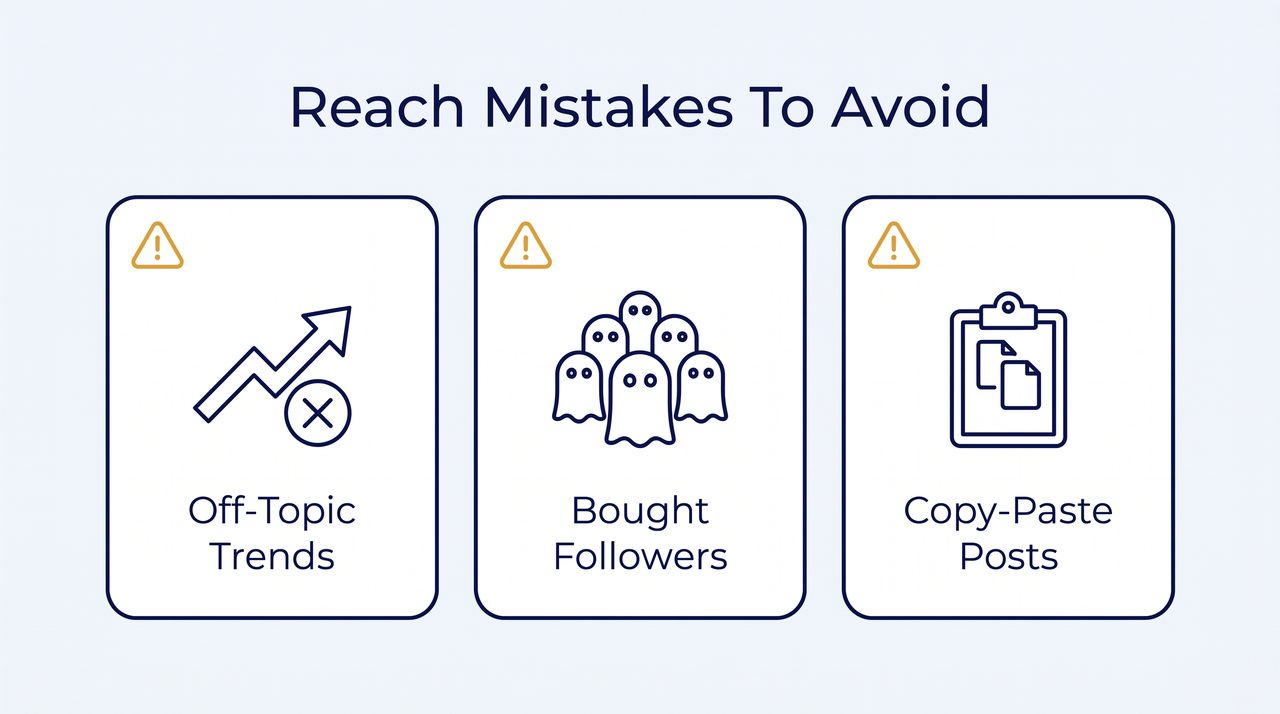
We made these so you don't have to. Three mistakes hurt our reach the most, and each one burned a different lesson in.
1. Chasing Viral Trends That Had Nothing To Do With Us
Early on, we pounced on every trending sound and meme going. A couple genuinely blew up, which felt incredible. Then we looked at who had actually followed. Total randoms with zero interest in our thing.
They never engaged again. Worse, the dead weight dragged our engagement rate down. The algorithm took the hint and showed us to fewer of the right people. One off-brand viral moment cost us weeks.
How to Fix: Only ride a trend if you can bend it to your niche so it still makes sense. If a sound is hot but has nothing to do with you, let it sail past. A smaller on-topic post beats a viral off-topic one every time, because it pulls people who will actually stick. Guard your relevance like the asset it is.
2. Buying Followers And Strangling Our Own Reach
In a weak moment, we bought a chunk of followers to look more legit. Worst thing we did, bar none. The fakes never liked, commented, or watched a thing, and that nuked our engagement rate overnight. Instagram treats engagement rate like a quality score. Ours dropped, so our real reach dropped off a cliff. We had literally paid to suppress ourselves. Clawing it back took months.
How to Fix: Never buy followers, end of. 86% of people in the US spend at least six hours a day online, so you are not short on potential followers. You just need to give the right people a reason to follow you.
If you have already done it, purge the obvious bots. Then put everything into real engagement to heal the ratio. A thousand people who actually care will out-reach a hundred thousand ghosts, every single time.
3. Copy-Pasting The Same Post To Every Platform
To save time, we fired the exact same post at Instagram, TikTok, and the rest. It belly-flopped everywhere except the one platform we had built it for. Every social media platform wants its own thing. A vibe that kills on one reads as lazy and out of place on another, and the algorithms there throttled our recycled stuff. We were technically everywhere and actually nowhere.
How to Fix: Tailor every post to the platform it is going on, even when the core idea carries over. Re-cut the video to the right length. Rewrite the caption in that app's voice. It genuinely helps to know that each platform's algorithm rewards different things, so you aim at the right signals in each spot. One native post beats five recycled ones that all flop.
Conclusion
Running an AI model Instagram account taught us that reach has almost nothing to do with the face on screen. The algorithm never once cared she was synthetic. It cared about the usual suspects. A tight niche. Brutal visual consistency. Stuff people send each other. And plain honesty about what she was.
The virtual persona was just the doorway that got people curious. Everything past that was plain old patient social media work, same as it ever was.
That is basically our whole job at SocialAppsHQ. We run the scrappy experiments and pull out what actually moves reach. Then we hand it over as plain digital marketing guides so you can skip the pricey trial and error we slogged through. Building an AI model Instagram page or a totally normal one, the fundamentals are sitting right there at socialappshq.com.

Rajat Garg
Rajat is a digital marketing specialist with more than 8 years of experience. At SocialAppsHQ he manages social media campaigns for businesses worldwide and shares practical, tested marketing guidance through the blog.